


Summary
- Microsoft open-sourced LiteBox, a library OS that sandboxes and shrinks the host attack surface.
- Uses North/South interfaces to translate app calls to the OS when bundled with apps.
- Not a consumer OS — for developers to bundle with apps, not something you’ll boot on your PC.
Okay, I’m going to need you to temper your expectations for this one. Microsoft has released a new operating system, and it’s open-source. However, before you start celebrating that the company has finally taken the Linux route for Windows 12, it’s worth noting that this operating system is something different from the Windows brand. In fact, it’s not even for you. That being said, it’s still a really interesting system that’s worth knowing about, even if it’s not something you’ll be booting into on your PC.

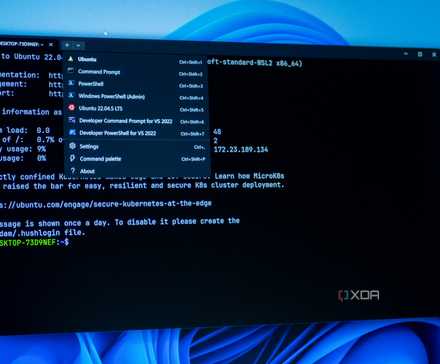
Microsoft is open-sourcing the Windows Subsystem for Linux
Developers rejoice!
Microsoft released LiteBox, a new library OS
Yeah, it’s not Windows 12. Sorry.


As spotted by Linuxiac, Microsoft has released a brand-new library OS called LiteBox. Before you excitedly bust out Rufus and plan out your dual boot, it’s worth noting that a “library OS” is a lot different from the one you’re thinking of:
LiteBox is a sandboxing library OS that drastically cuts down the interface to the host, thereby reducing attack surface. It focuses on easy interop of various “North” shims and “South” platforms. LiteBox is designed for usage in both kernel and non-kernel scenarios.
LiteBox exposes a Rust-y
nix/rustix-inspired “North” interface when it is provided aPlatforminterface at its “South”. These interfaces allow for a wide variety of use-cases, easily allowing for connection between any of the North–South pairs.
Did you get all that? No? Don’t worry; as you might imagine, LiteBox is not something you can just boot up on your PC like Windows 11. Instead, it’s a library OS that developers can package with their apps so they run on Windows. One of the examples Microsoft gives for using LiteBox is bundling it with a Linux app so it can run on Windows. LiteBox acts as a translator between the two; it takes in the app’s ‘language’ (i.e., a Linux app) through the North gate and translates it to the operating system’s ‘language’ (i.e., Windows) through the South gate.
So, yeah, it’s not a brand new user OS, but it is an exciting new development in the world of making Linux and Windows communicate better with one another, and that’s a win in my book. It’ll likely become a key tool to keep Linux users happy using Windows, like WSL (although, like WSL, it may accidentally cause people to do the opposite of what Microsoft wants).
link