



tcsaba/iStock/Getty Images Plus
Predictive maintenance is becoming an essential practice for fabricators looking to maximize uptime, control costs, and ensure weld quality. Shielding gas systems, a critical component in many welding processes, are particularly prone to leaks, blockages, and component wear that can go unnoticed until they impact production. Canadian Fabricating & Welding spoke with Doug Bolinger, product manager, Weld Central®, Wire Wizard Welding Products, Jackson, Mich., about the importance of preventive maintenance for shielding gas systems and how shops can get started by monitoring key parameters like flow, pressure, and gas purity.
Canadian Fabricating & Welding (CFW): What type of failures in shielding gas systems are the most predictable when it comes to having the right monitoring in place?
Doug Bolinger: The easiest to detect are leaks, blockages, and incorrect parameters. These tend to show measurable changes in flow or pressure, making them ideal for predictive monitoring. Environmental factors, like heat, welding spatter, or vibration near robotic cells, can accelerate wear, so monitoring in these areas is particularly helpful.
CFW: How can gas purity or flow anomalies be early indicators of equipment issues?
Bolinger: Depending on the anomaly, they can tell you several things. For example, if the average flow during a weld is lower than what’s set on your regulator, it could indicate a leak somewhere in the system. Variations in gas purity can also signal contamination or cylinder issues. Trending these anomalies over time helps catch problems before they affect weld quality.
CFW: What parts of a shielding gas system tend to fail first, and how can predictive maintenance address that?
Bolinger: Anywhere you have fittings or connection points is vulnerable, because after pressurization, they’re not always checked. Hoses are particularly susceptible due to exposure to heat, spatter, and mechanical stress. Predictive maintenance helps by continuously monitoring these components. IoT sensors, for instance, establish a baseline of normal operation, so if a leak develops or a hose begins to degrade, the data will show deviations early, allowing you to plan repairs during scheduled downtime.
CFW: What kind of data should shops be collecting to make informed decisions about their shielding gas systems?
Bolinger: Flow rates are the most common metric because they can reveal blockages, leaks, and excess usage. Pressure readings and gas purity are also useful. This data not only helps with predictive maintenance but can also be used for quality checks, ensuring welds meet AWS standards or internal guidelines. Even simple manual logs of flow and pressure can be valuable. The key is consistent collection and context.
CFW: How can trends in gas consumption or purity measurements reveal problems before weld quality is affected?
Bolinger: Trends indicate when something is starting to break down. Too much gas consumption may point to leaks, while too little could indicate a blockage. Small deviations might not immediately affect weld quality, but trending lets you address issues early. Linking consumption trends with weld quality data, like porosity or fusion defects, can refine maintenance timing.
CFW: What role does real-time monitoring play in predicting failures?
Bolinger: Real-time monitoring allows you to compare conditions to your baseline instantly. You can identify issues early and reduce downtime because maintenance can be planned rather than emergency driven. Advanced systems can also trigger alerts via PLCs, email, or analytics platforms, helping operators take action before a failure occurs.
CFW: What steps should shops take to develop a predictive maintenance program for their welding equipment?
Bolinger: Start by collecting data, whether manual or sensor-based, so you can understand your system’s normal operating parameters and identify potential failure points. Once you have a baseline, you can transition from purely preventive to predictive maintenance.
Without advanced monitoring tools, shops can still be predictive by tracking the lifecycle of components to anticipate replacements before failure and logging normal operating conditions and comparing them periodically to detect deviations.
It’s also important to define your objectives. Do you want to detect leaks, track consumption for costing, or ensure process quality? Knowing what you’re measuring and why ensures your data collection is purposeful.

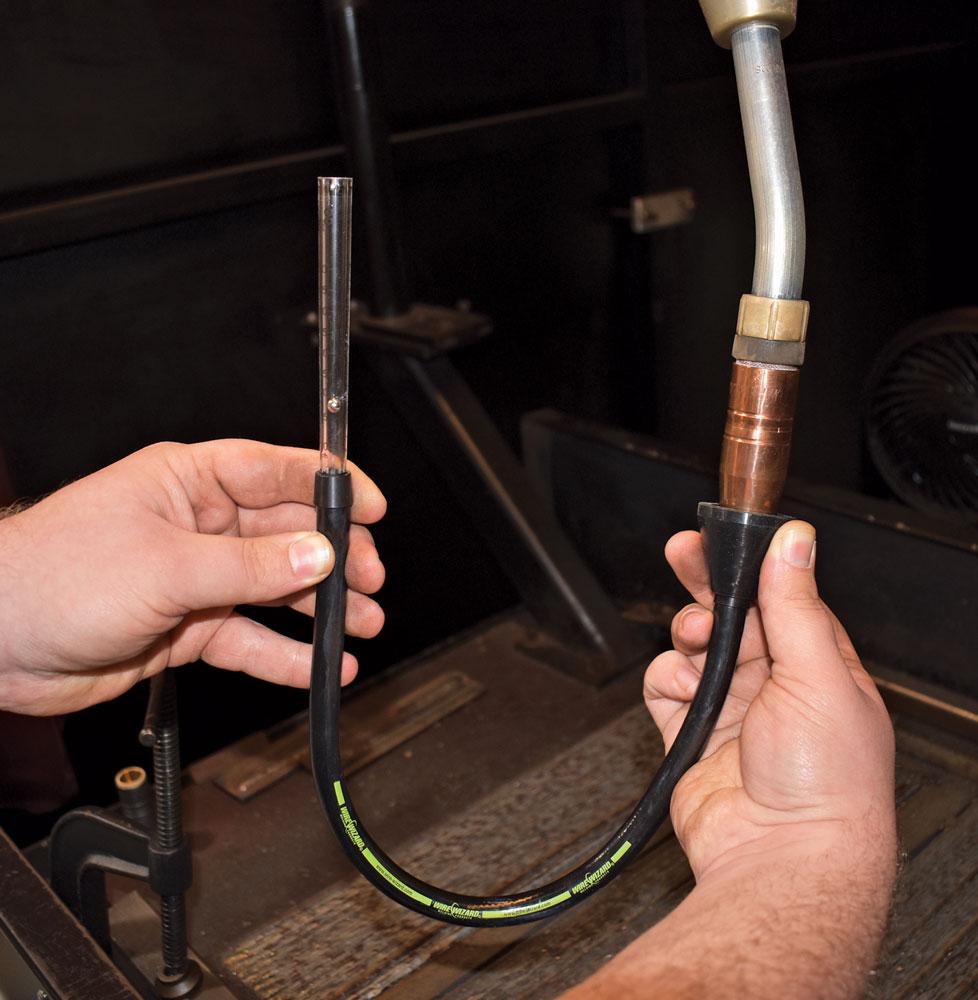
Predictive maintenance doesn’t need costly equipment; simple tools, like this gas flow gage, can deliver valuable data when used consistently. Wire Wizard Welding Products.
CFW: Are there common misconceptions about the cost or complexity of a monitoring system?
Bolinger: Some shops assume predictive maintenance requires expensive equipment, but that’s not always true. Manual gauges or simple digital flowmeters can provide meaningful insights if used consistently. More advanced digital systems can integrate with PLCs for automated alerts, but the approach should match the shop’s needs and resources. Even basic setups can generate actionable predictive data.
CFW: How is digitalization and Industry 4.0 changing the approach to predictive maintenance of shielding gas systems?
Bolinger: Digitalization makes data more accessible. You no longer need to walk to the weld cell to check gauges; information can be sent directly to a computer, PLC, or email. Analytics platforms and even AI can identify anomalies and alert operators before failures occur. This helps smaller shops and SMEs leverage predictive maintenance without huge investments, allowing them to optimize system performance, reduce downtime, and improve weld quality.
Actionable Next Steps
Here is a roadmap to start predictive maintenance of a shielding gas system:
- Map the system and identify critical points (hoses, regulators, manifolds).
- Decide what parameters are most important for your process (flow, purity, pressure, consumption).
- Start low-tech (manual logs) if needed, then gradually adopt digital sensors.
- Establish baseline values under normal operation.
- Set alert thresholds and begin trending for predictive insights.
- Review and adjust maintenance schedules periodically based on real data.
Wire Wizard Welding Products, www.wire-wizard.com

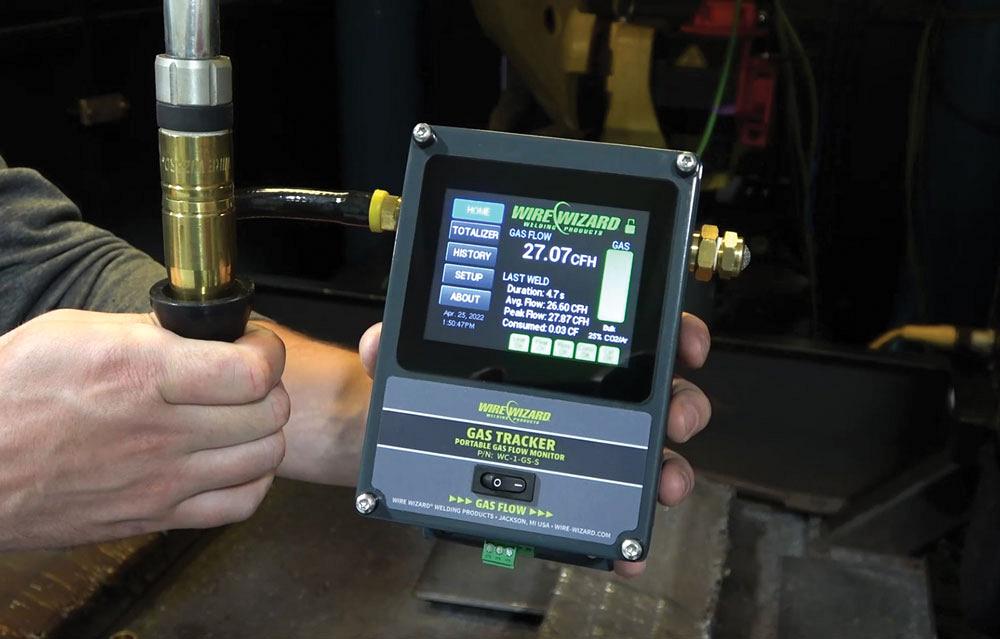
Wire Wizard’s Gas Tracker Digital Gas Flow Monitor tracks shielding gas flow in robotic or semi-automatic MIG and TIG welding. It functions as a portable or in-line unit to monitor, totalize, and verify gas flow at the nozzle. Wire Wizard Welding Products.
link